

Share This Article
Charleston, South Carolina is known for its rich history, beautiful architecture, and family friendly attractions. During our visit we explored historic sites, learned important history, and experienced several unique activities that kept my son engaged throughout the trip.
Where We Stayed: Homewood Suites
We stayed at the Homewood Suites, which worked well for our visit because it was within walking distance of several attractions. Having a hotel close to downtown made it easy to explore without constantly worrying about parking or long drives. The hotel also provided the space and comfort we needed after busy days of exploring the city.
Exploring Downtown Charleston
One of the best ways to experience Charleston is simply by walking around downtown. The historic streets, charming buildings, and waterfront views make it a great place to explore at a relaxed pace.
We stopped by the Charleston Visitor Center to learn more about the city and see what activities were available nearby. The visitor center is a helpful starting point if you want maps, recommendations, or information about tours and attractions.
Angel Oak Tree
One of the most memorable stops on our trip was visiting the Angel Oak Tree. Located on Johns Island, this tree is considered one of the oldest living trees east of the Mississippi River and is estimated to be more than 400 years old. The tree is massive, with large twisting branches that stretch out in every direction. Some of the branches are so long that they appear to touch the ground before growing upward again. The location is a little tucked away, often described as being back in the cut, but the drive is worth it. Standing under a tree that has been alive for centuries is a powerful experience. My son also learned about acorns and how trees grow and reproduce, which made the visit both fun and educational.
McLeod Plantation Historic Site
Another important stop during our visit was the McLeod Plantation Historic Site. This location provides a deeper understanding of the history of slavery in the United States and the lives of the enslaved people who lived and worked there. The plantation once enslaved up to 100 people. During the visit we saw the plantation house where the slave owner lived as well as the small cabins where enslaved people slept. One of the cabins was extremely small and we learned that up to 15 enslaved individuals were forced to sleep in that single space.
We also saw the outhouse that multiple enslaved people had to use at the same time without privacy. Seeing these spaces in person provides a powerful perspective on the harsh realities they experienced.
During our visit we also heard from a Gullah interpreter who shared the history and culture of the Gullah people. The Gullah are descendants of enslaved Africans who lived in the coastal regions of South Carolina and Georgia. Because of the geographic isolation of the sea islands and coastal areas, they were able to preserve many African traditions, languages, and cultural practices that continue today.
Highlights of visiting McLeod Plantation include:
• Learning directly from Gullah interpreters who share cultural history
• Touring the plantation grounds and preserved structures
• Seeing the enslaved quarters and understanding living conditions
• Educational programs that explain the daily lives of enslaved people
• Opportunities for children to learn about agriculture, trees, and local history
Holiday Festival of Lights
If you visit Charleston during the holiday season, the Holiday Festival of Lights is a fun activity for families. This Christmas-themed event is a drive-through light display filled with colorful decorations and holiday scenes.
Be prepared for a long line to enter. We waited for a while before getting inside, but the good part is that you remain in your vehicle during the wait. Once inside, the light displays stretch across the park and create a festive atmosphere. My son loved seeing all the lights and holiday characters. The display was worth the wait.
South Carolina Aquarium
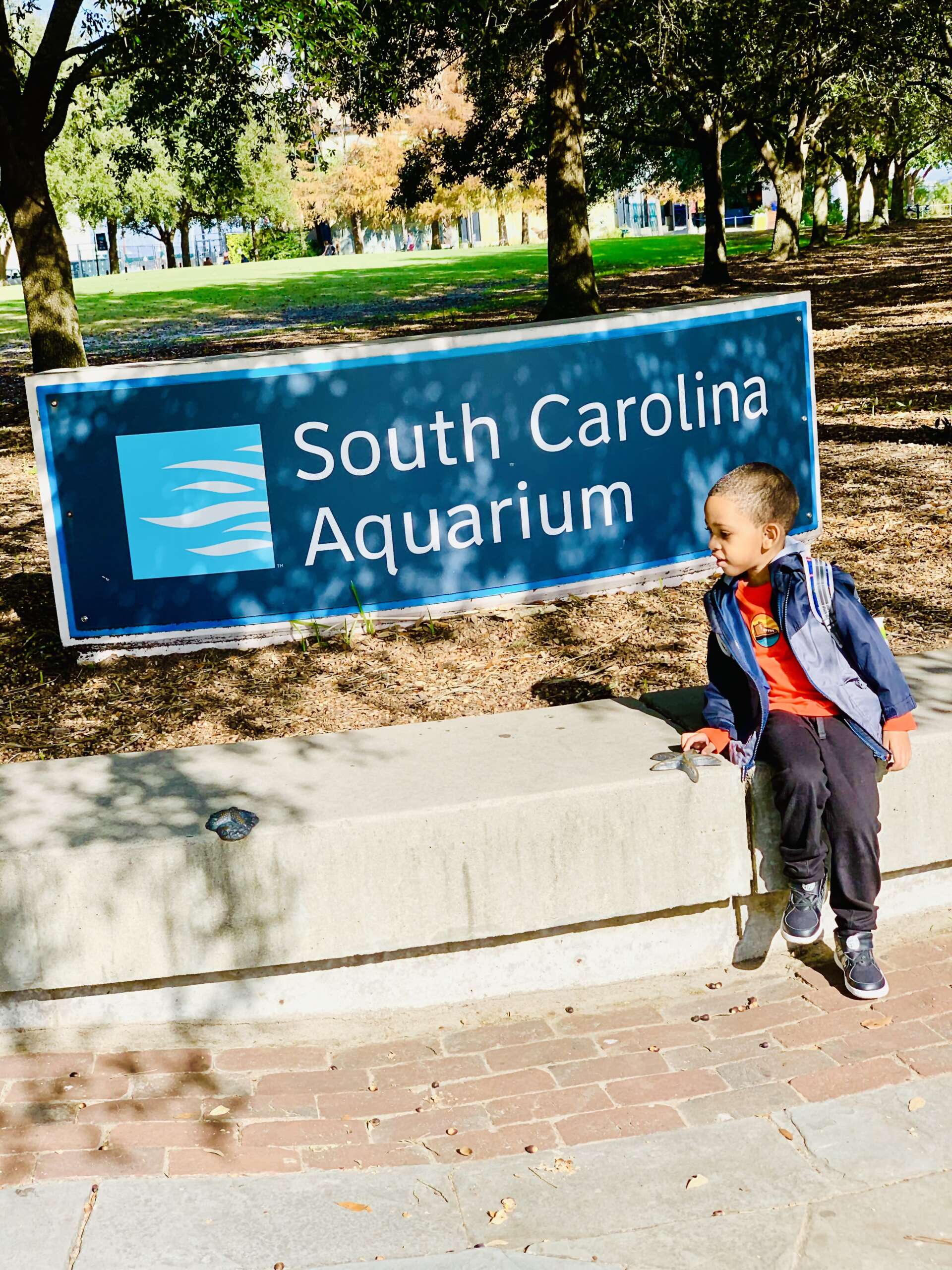
The South Carolina Aquarium was another highlight of our trip. The aquarium features a variety of marine life from the rivers and coastlines of the region.
One of the most exciting moments for my son was feeding stingrays for the first time. Visitors can purchase feeding opportunities for $5 which includes three feedings. Being able to interact with the stingrays made the experience even more memorable.
Other highlights of the aquarium include:
• Touch tanks where children can interact with marine life
• Large tanks featuring sharks, sea turtles, and coastal fish
• Educational exhibits about South Carolina waterways
• Interactive displays designed for children
• Beautiful views of the Charleston Harbor from the aquarium
Sensory Friendly Things to Do in Charleston
Charleston offers several activities that can work well for families traveling with autistic children or children who benefit from sensory-friendly environments.
• Angel Oak Tree. Open outdoor space where visitors can move at their own pace.
• Waterfront Park. Quiet walking paths and open areas near the water.
• Charleston City Market early in the morning when crowds are smaller.
• South Carolina Aquarium during weekday mornings for a calmer experience.
• Charleston Visitor Center for planning quieter activities.
• Folly Beach or Isle of Palms for relaxing outdoor sensory experiences.
• Carriage tours which provide a calm way to see the historic district.
To see this adventure in action, check out the highlights from Charleston South on my Instagram page @autismspectrumadventures.
